
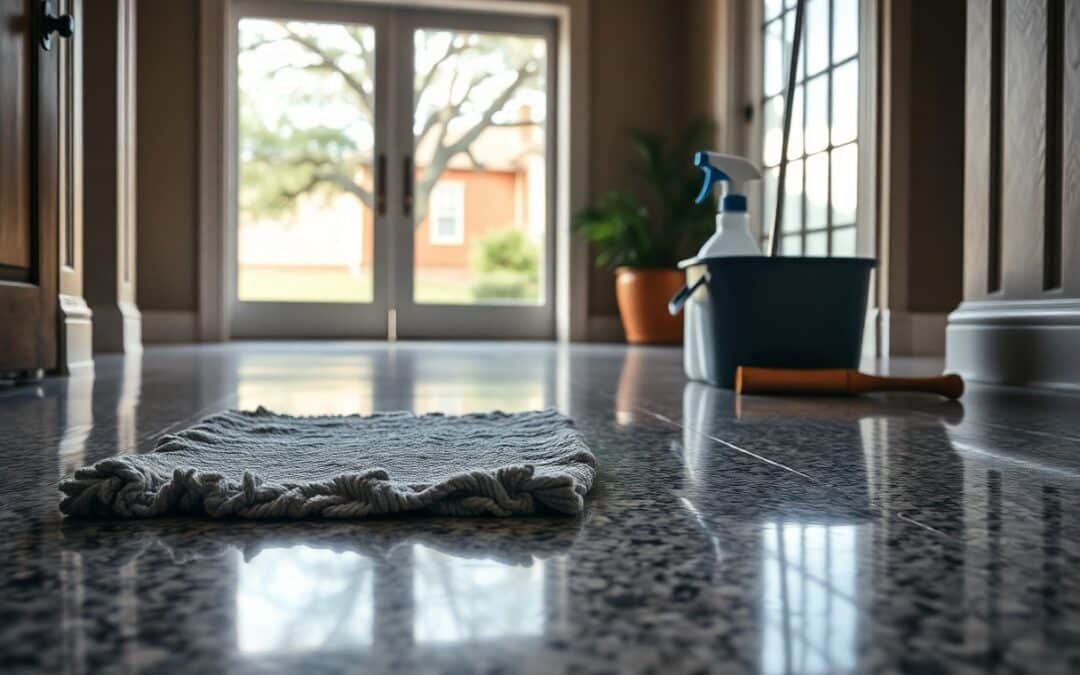
Granite is a durable, low-porosity natural stone that you can maintain in McKinney, TX with straightforward care. Sweep and damp-mop with pH-neutral cleaners, avoid acidic or abrasive products, and reseal every 1-3 years or sooner in high-traffic or humid areas. Periodic professional polishing restores shine, so with routine upkeep your floors will remain attractive and long-lasting.
Key Takeaways:
- Granite is highly durable and resists scratches, heat, and everyday wear, so routine upkeep is generally low-effort in McKinney homes.
- Periodic sealing (commonly every 1-3 years depending on use and sealer) is needed to maintain stain resistance, especially in kitchens and entryways.
- Clean with a pH-neutral stone cleaner or mild dish soap and a soft mop; avoid acidic or abrasive products that can dull or etch the surface.
- McKinney’s humidity and hard water can affect grout and cause mineral spotting-seal grout, dry wet areas promptly, and use stone-safe products for mineral buildup.
- Ongoing maintenance costs are modest (DIY sealing or occasional professional resealing); properly maintained granite adds lasting value and longevity to the home.
Understanding Granite Flooring
Formed from cooled magma, granite’s interlocking crystals of quartz, feldspar and mica give it a Mohs hardness of about 6-7 and a density near 2.65 g/cm³, so you’ll notice real resistance to scratches and heavy wear. Its typical water absorption is under 0.5%, which means if you seal it every 1-3 years-more often in McKinney’s humid summers-you’ll maintain stain resistance and longevity for decades.
Characteristics of Granite
You’ll find granite varies widely in color and veining, with finishes like polished, honed or textured affecting slip resistance; polished looks glossy but can be slippery when wet, while honed offers more traction. Tile thicknesses commonly range from 10-20 mm and standard sizes include 12″x12″, 18″x18″ and 24″x24″, so you can match aesthetics and traffic needs room by room.
Advantages of Granite Flooring
You gain a low-maintenance, high-durability floor that resists heat, most household chemicals and everyday abrasion; routine care is typically sweeping and a pH-neutral mop. Granite also boosts resale appeal-real-estate listings often highlight natural stone-and when properly sealed maintains its appearance far longer than many laminates or vinyl options.
For practical numbers, expect to reseal every 1-3 years depending on porosity and use; perform a 24-hour water drop test to check absorption before sealing. Granite tolerates hot pans and brief surface temperatures well (often >500°F locally), withstands thousands of footfalls without visible wear, and when installed correctly can last 50+ years, making it a cost-effective choice for your McKinney home.
Maintenance Requirements
You’ll keep granite looking good with simple routines: sweep or dust‑mop daily (or at least 3× weekly), wet‑mop weekly using a pH‑neutral stone cleaner diluted per label (about 1 oz per gallon), and blot spills within 10-15 minutes. Granite’s Mohs hardness of 6-7 helps resist scratches, but soft abrasives and acidic cleaners can dull polished finishes, so always use microfiber tools and gentle cleaners.
Regular Cleaning Practices
Start cleaning with a microfiber dust mop or vacuum (soft‑brush attachment) to remove grit that causes micro‑scratches. Then mop with warm water and 1 oz per gallon pH‑neutral cleaner once weekly; increase to twice weekly in entryways or kitchens. Avoid vinegar, bleach, ammonia and abrasive pads. For stains, use a manufacturer‑approved poultice and test any cleaner in an inconspicuous spot first.
Preventive Care and Sealing
Plan to reseal most granite floors every 1-3 years; high‑traffic areas may need resealing every 6-12 months. Do a water‑drop test-if a bead soaks in within 10 minutes, it’s time to reseal. Choose an impregnating sealer that penetrates about 1-2 mm to protect pores without altering sheen, and seal grout annually to prevent moisture wicking and discoloration.
When sealing, clean thoroughly and let the floor dry 24-48 hours (longer in humid McKinney summers), then apply sealer in thin, even coats, wiping off excess after 10-15 minutes and allowing 24-48 hours to cure before foot traffic. For honed or textured finishes consider professional application to ensure uniform penetration; re‑test with the water drop after curing to confirm protection.
Challenges in Maintenance
Wear concentrates in entryways and kitchens where grit, oil and heavy foot traffic abrade polish; grout lines trap dirt and discolor within months; Texas heat, humidity swings and direct sun near windows can accelerate sealer breakdown so you may need attention sooner than in milder climates; small fissures and resin-filled veins sometimes hold stains that ordinary cleaning won’t remove, so targeted interventions and periodic professional care are often necessary to keep your floors looking uniform.
Common Issues Faced
You’ll most often deal with dulling in high‑traffic routes within 3-5 years, grout darkening after 6-12 months without sealing, grease or oil stains from cooking, and occasional mineral deposits from hard water; granite resists etching better than marble, yet acidic spills (citrus, vinegar) left over 10-15 minutes can dull polished surfaces, while improper cleaners and abrasive pads create micro‑scratches that accumulate over time.
Solutions and Tips
Use a pH‑neutral stone cleaner for weekly mopping and blot spills within 10-15 minutes, perform a water‑drop test every 6-12 months to check sealer integrity, reseal at 1-3 year intervals depending on wear, protect high‑traffic zones with rugs and entry mats, and schedule professional honing/polishing when shine diminishes-typically every 5-10 years in busy kitchens-to restore factory gloss without removing significant material.
- Sweep or dust‑mop daily and wet‑mop weekly with a stone‑safe cleaner.
- Blot oil or acidic spills within 10-15 minutes; avoid vinegar, bleach and abrasive powders.
- Test sealer by dropping 3-5 drops of water on the surface; if it absorbs in under 10 minutes, reseal.
- This routine minimizes staining, extends sealer life and reduces need for costly restoration.
For sealer choices, you can apply a DIY impregnating sealer to a kitchen (200 sq ft) for roughly $50-$200 in materials; professional reseal services typically run $1-$4 per sq ft while full restoration/honing is commonly $3-$7 per sq ft depending on condition. When spot‑treating stains, use poultices or a commercial stone stain remover and test in an inconspicuous area; consider a local McKinney stone pro for stubborn oil or resin stains and for yearly inspections to catch issues early.
- Compare product labels and prefer “stone‑safe” or “pH‑neutral” cleaners to protect polish.
- Use felt pads on furniture and low‑abrasion mats in entryways to limit grit wear.
- Schedule professional inspections every 1-3 years if you notice dulling or persistent stains.
- This approach balances DIY upkeep with timely professional care to preserve appearance and value.
Local Climate Impact in McKinney, TX
McKinney’s humid subtropical climate-with average July highs near 95°F, winter lows that can dip into the 20s°F, and about 38-42 inches of rain annually-shapes how your granite performs. High humidity and temperature swings place extra stress on grout and sealants, while strong sun through south‑facing windows raises surface temperatures and accelerates wear on topical finishes. You’ll also track in more red clay after storms, which increases cleaning frequency to avoid staining in seams.
Weather Considerations
Summer heat and typical 60-80% humidity make dirt and pollen stickier, so you’ll likely sweep 3-5× weekly and wet‑mop at least weekly during peak months. Spring hail and thunderstorms introduce gritty debris that can scratch finishes if not removed promptly, and winter freezes-though infrequent-can cause grout to crack via freeze‑thaw, necessitating periodic grout inspection after cold snaps.
Environmental Effects on Granite
Granite’s density and low porosity-many commercial grades sit under 1%-mean moisture rarely penetrates the stone, but environmental factors still affect appearance. You’ll notice topical sealers breaking down faster under prolonged UV exposure, acidic cleaners (pH <4) or pool chemicals dulling polish over time, and salts or minerals leaving deposits in grout lines if wet‑dry cycles recur frequently.
Staining is uncommon for oil spills, yet North Texas red clay can leave rust‑like marks if left 24-48 hours; immediate spot cleaning prevents permanent discoloration. Impregnating sealers penetrate millimeters and typically last 1-3 years in high‑traffic zones or up to 5+ years in low‑use rooms, whereas surface coatings wear faster and may need annual reapplication near entries or large windows.

Cost of Maintenance
Expect routine granite upkeep to run modestly compared with other flooring: sealing every 1-3 years typically costs $0.50-$4 per sq ft (DIY supplies $30-$100; pros $200-$800 for a typical room), periodic polishing $3-$8 per sq ft, and isolated repairs $150-$800 depending on depth. You’ll pay more for high-traffic areas or complex layouts, but preventive sealing and prompt spill care often keep annual expenses under $200 for most homeowners.
Budgeting for Upkeep
For planning, allocate roughly $0.50-$2 per sq ft annually for basic care: cleaning products, microfiber mops, and occasional sealant. If you have 500 sq ft, that’s about $250-$1,000 per year if you include a professional seal or polish every few years; doing everything yourself can drop first-year costs under $150, while professional cycles add $200-$1,200 depending on services.
Professional vs. DIY Maintenance
You can save with DIY: sealers cost $30-$60 and last multiple applications, while basic cleaners run $10-$25. Professionals bring diamond-polishing equipment and guarantee results, typically charging $2-$8 per sq ft for restoration. If you’re comfortable with products and light maintenance you’ll cut costs, but pros handle deep scratches, lippage, and high-gloss finishes more reliably.
Weigh time, skill, and long-term value when choosing. If you have a 600 sq ft entry and kitchen that see daily foot traffic, DIY sealing every 1-2 years plus weekly pH-neutral cleaning will reduce staining risk but won’t fix worn sheen; a one-time professional restoration at $1,200-$3,000 can restore uniform gloss and add years to the surface. You should also check warranties-some installers require professional maintenance to keep guarantees valid, which can offset higher upfront service costs.

Comparison with Other Flooring Options
Granite vs. Common Alternatives
| Flooring Type | How It Compares |
|---|---|
| Granite | You get Mohs hardness ~6-7, 50+ year lifespan with sealing every 1-3 years, high scratch/stain resistance but higher upfront cost. |
| Hardwood | Typically 20-30 years, can be refinished every 10-15 years (roughly $1.50-$4/sq ft), more vulnerable to moisture and dents than granite. |
| Ceramic/Porcelain Tile | Comparable longevity to granite, but grout needs sealing (every 1-3 years) and grout cleaning; porcelain resists stains better than ceramic. |
| Luxury Vinyl | Low maintenance, 10-20 years, inexpensive ($1-$5/sq ft), easier to replace but less heat/scratch resistant than granite. |
| Laminate | 10-25 years, no refinishing, sensitive to standing water; you trade durability for lower cost and easier DIY installation. |
| Carpet | 5-15 years, high maintenance (regular vacuuming, professional cleaning every 6-12 months) and poor stain resistance compared with stone. |
Durability and Longevity
Granite’s 6-7 Mohs hardness and low porosity let your floor resist scratches, heavy foot traffic and common spills, delivering 50+ years in many McKinney homes; hardwood will often need refinishing every 10-15 years, tile can last decades but grout requires upkeep, and vinyl or carpet typically need replacement within 10-20 years depending on wear.
Maintenance Ease of Alternatives
Vinyl and porcelain are the easiest for routine care-simple sweeping and pH-neutral mopping-while hardwood needs gentle cleaners and periodic refinishing ($1.50-$4/sq ft), and tile grout demands resealing every 1-3 years (about $0.50-$1/sq ft) to stay stain-resistant; carpet forces more frequent professional cleanings and spot treatments.
When you compare maintenance steps, use a pH-neutral cleaner for natural stone and a grout sealer for tile; avoid vinegar or ammonia on both granite and hardwood. For vinyl and laminate, you should avoid steam mops and excess water. Budget-wise, expect annual professional maintenance for grout or deep carpet cleaning ($75-$200 per service) versus infrequent granite sealing at $0.50-$4 per sq ft.
To wrap up
To wrap up, granite flooring in McKinney, TX is not hard to maintain if you follow a few simple steps: sweep and damp-mop regularly, avoid acidic cleaners, and reseal annually or as needed because of regional humidity and potential staining. With consistent routine care and occasional professional sealing, your granite will remain durable and attractive for years, protecting your investment and minimizing long-term upkeep.
FAQ
Q: Is granite flooring hard to maintain in McKinney, TX?
A: Granite flooring is generally low-maintenance and well suited to McKinney’s climate when properly cared for. Its natural hardness resists scratches and heavy wear from foot traffic, and a quality sealant minimizes staining from spills common in households. Routine sweeping or dry mopping to remove grit, prompt spill cleanup, and periodic damp mopping with a pH-neutral stone cleaner will keep granite looking good. High-traffic areas and countertops may need more frequent attention, but overall granite is easier to maintain than many softer stones.
Q: How does McKinney’s weather affect granite floors?
A: McKinney experiences hot, humid summers, mild winters, and occasional freezes. Granite itself is stable under these conditions and does not warp or swell like some flooring materials. However, thermal cycling and moisture can affect grout lines and any improperly sealed edges. Humidity can promote mold or mildew in grout if moisture is trapped, so ensure good ventilation and keep grout sealed. In exterior or entry areas exposed to freeze-thaw cycles, use a frost-resistant installation method and inspect grout/sealants periodically.
Q: How often should granite be sealed in McKinney, TX?
A: Sealing frequency depends on the stone’s finish, traffic levels, and the type of sealer used. Polished granite often resists stains longer and may only need sealing every 2-5 years; honed or high-porosity slabs can need sealing annually. Conduct a water drop test: place a few drops on the surface-if it beads, the seal is good; if it darkens or absorbs, reseal. High-traffic areas, kitchens, and areas exposed to outdoor elements usually require more frequent sealing.
Q: What cleaning products and methods are best for granite in McKinney homes?
A: Use pH-neutral, stone-safe cleaners and soft tools: microfiber mop or soft cloth, a dust mop for daily debris removal, and a damp mop with a commercial stone cleaner for deeper cleaning. Avoid acidic cleaners (vinegar, lemon), bleach, ammonia, or abrasive scrubbing pads that can dull the finish or degrade sealers. For grease or stubborn spots, use a stone-safe degreaser or a poultice paste designed for granite. Dry the floor after mopping to prevent water sitting in grout lines.
Q: When should I call a professional for granite maintenance or repair?
A: Hire a professional if you notice deep scratches, chips, large stains that won’t lift with a poultice, significant grout failure, or dulling that home polishing can’t fix. Professionals can re-polish honed or damaged surfaces, perform hot water or resin repairs for chips, and reseal properly using commercial-grade products. Consider professional maintenance every 5-10 years for high-end finishes or if you want restoration rather than replacement.
About Is granite flooring hard to maintain in McKinney TX? with Flooring Source of Texas
Homeowners searching for Is granite flooring hard to maintain in McKinney TX? choose Flooring Source of Texas for quality materials, careful installation, and clear communication. Our Flower Mound team serves nearby DFW communities with hardwood, vinyl, tile, laminate, carpet, and remodeling support.
Request a free estimate for Is granite flooring hard to maintain in McKinney TX?, browse our service areas, or contact us at (972) 778-6855. We help you compare flooring options, plan timelines, and finish the job cleanly.
Is granite flooring hard to maintain in McKinney TX? — local guidance from Flooring Source of Texas
Flooring Source of Texas helps homeowners in Mckinney, TX plan flooring and remodeling with clear product options, realistic timelines, and install crews that protect your home day by day. Our Flower Mound showroom at 1900 Long Prairie Rd Ste 116 is open for sample browsing, and we provide free on-site estimates across North Texas.
When we evaluate a home, we look at subfloor condition, moisture risk, transitions between rooms, stair strategies, and how the finished floor will live with pets, kids, and Texas heat. That practical checklist keeps flooring and remodeling from turning into change orders after demolition starts.
Popular materials for Mckinney, TX homes include waterproof luxury vinyl plank for kitchens and mudrooms, engineered hardwood for living areas that want natural grain, porcelain or ceramic tile for wet zones, and carpet where comfort matters most. We help you compare wear layers, core types, and maintenance so the quote matches how you actually use each room.
Call (972) 778-6855 or visit our contact page to schedule a free estimate. Explore related services on our Texas flooring and Texas remodeling pages, or review coverage on our service areas page.
Flooring Source of Texas has served DFW families for decades with straightforward pricing, careful prep, and clean job sites. Whether you are refreshing one room or remodeling multiple spaces in Mckinney, TX, we keep communication simple from sample selection through final walkthrough.
Flooring Source of Texas provides flooring installation and remodeling support across this community and the greater DFW area. From the first sample appointment in Flower Mound to the final walkthrough, we keep scope, product, and schedule aligned so homeowners know what happens each day on site.
Our crews install waterproof luxury vinyl, hardwood and engineered hardwood, ceramic and porcelain tile, carpet, and laminate. We also coordinate kitchen and bathroom remodeling work when flooring is part of a larger renovation. Moisture testing, flatness checks, and transition planning are part of the standard process—not optional extras.
Request a free estimate at (972) 778-6855 or through our contact page. Showroom: 1900 Long Prairie Rd Ste 116, Flower Mound, TX 75022. Browse flooring services, remodeling, and service areas to see how we help nearby cities with the same standards.