
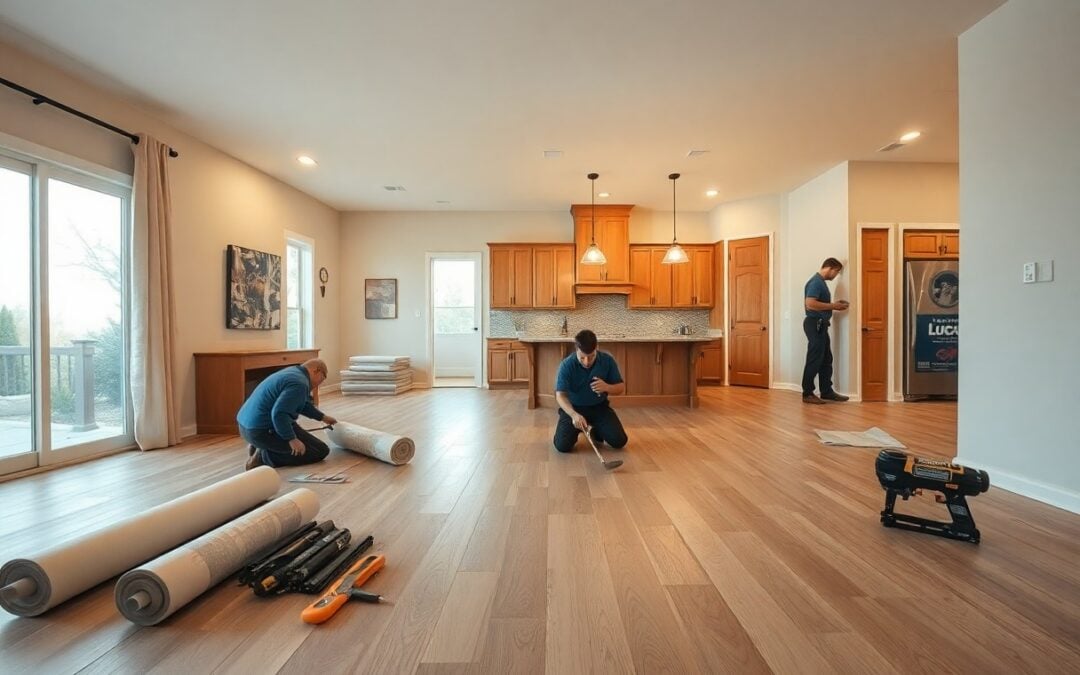
Many Lucas homeowners face whole-home flooring replacement; you can expect a clear timeline, professional site protection, material delivery and installation phases, occasional room closures, and a final walkthrough to confirm quality.
Initial Consultation and Material Selection
During the initial consultation you’ll review timelines, walk-throughs, and sample options so your installer understands your home’s specifics and budget.
Assessing the Specific Needs of Lucas Properties
Local building age, subfloor condition, and traffic patterns determine prep needs and staging so you know project scope and possible surprises.
Choosing Materials Suited for the North Texas Climate
Selecting resilient, heat-tolerant materials like engineered hardwood, luxury vinyl, or tile helps you avoid warping and fading in North Texas summers.
Climate in Lucas brings hot, humid summers, occasional storms, and temperature swings, so you should prioritize materials that resist moisture, UV and dimensional changes. You’ll get better long-term performance with waterproof LVP, porcelain tile, or engineered hardwood with a proven moisture barrier. Opt for low-VOC adhesives, proper acclimation, and manufacturer-backed warranties to protect your investment.
Pre-Installation Preparation and Logistics
Plan for firm timelines, delivery windows, and protective coverings so you can coordinate entry, permit checks, and temporary relocation while installers work through each room.
Furniture Removal and Room Clearing Protocols
You should clear pathways and move fragile items; crews can remove large furniture for you, or you can arrange pre-move services to avoid delays and reduce risk of damage.
Demolition and Responsible Disposal of Existing Flooring
Demolition crews will remove old flooring using dust-control, inspect for mold or asbestos risk, and separate waste; ask installers how they’ll dispose, recycle, or haul materials to proper facilities to keep your project compliant.
Ask your contractor to perform pre-demolition inspections for hidden asbestos, lead, or mold and to outline containment strategies, dust control, and disposal routes; you should get written confirmation of hazardous-material procedures, recycling options for salvaged wood or tile, estimated haul-away fees, and a disposal manifest so you can verify lawful handling and avoid surprise costs or fines.
Subfloor Assessment and Correction
Inspection of the subfloor and joists identifies rot, squeaks, and uneven areas so you know which boards need replacement, reinforcement, or additional sheathing before new flooring goes down.
Leveling and Repairing Foundation Imperfections
Leveling addresses dips, high spots, and joist deflection with sanding, sistering joists, or applying self-leveling compound so you get a flat, stable surface for installation.
Moisture Testing and Vapor Barrier Installation
Testing uses moisture meters and probes so you can see subfloor and slab moisture levels before installers add a vapor barrier or adjust ventilation to protect new floors.
When readings exceed manufacturer limits-often around 12% for wood or specific RH percentages for concrete-your crew will recommend drying, dehumidification, or a 6-mil polyethylene or proprietary vapor retarder underlayment; you should receive moisture documentation and a mitigation plan to prevent cupping, adhesive failure, or mold prior to installation.
The Professional Installation Phase
Expect crews to work methodically: protect furnishings, clear work zones, inspect and level subfloors, and coordinate deliveries so you get clear timelines and minimal disruption during the installation phase.
Precision Layout and Transition Management
Measure and mark thresholds, room lines, and transition points so you see continuous visual flow; installers will set expansion gaps, cut pieces to maintain pattern, and trial-fit transitions to match heights you prefer.
Specialized Techniques for Hardwood, Tile, and Luxury Vinyl
Trust pros to use species-appropriate nailing for hardwood, uncoupling membranes and proper thinset for tile, and the correct adhesive or click-system installation for luxury vinyl so you avoid movement and finish issues.
You will see hardwood acclimated on-site, boards sequenced for grain and traffic, and either site-finish sanding or factory finishes applied with correct nail or staple patterns. Tile work includes substrate leveling, backer board or membrane installation, thinset selection, grout spacing and sealing, plus accurate cutting. Luxury vinyl installations use recommended adhesives or floating methods, allow perimeter expansion, and may require heat-welded seams or pressure-sensitive joints depending on product and room use.
Project Timelines and Daily Expectations
Expect crews to work predictable daytime hours, progressing room by room with dust control, daily cleanup, and a posted schedule so you can plan around noisy or closed areas.
Estimated Duration for Comprehensive Whole-Home Projects
Usually whole-home replacements take one to three weeks depending on square footage, subfloor prep, and material lead times; you’ll receive a timeline with milestones and buffer days.
Managing Household Logistics During Construction
Plan to set up temporary walkways, protect high-use items, and designate a staging area; you may need alternate sleeping or cooking arrangements for sealed or noisy rooms.
Create a household plan listing off-limit rooms, furniture storage spots, and a daily contact with the crew lead; you should arrange pet care, prioritize necessary items, confirm dust barriers and HVAC protection, and schedule quiet hours for children or seniors to reduce stress and disruption.

Post-Installation Quality Assurance
You should expect a final quality check covering installation, transitions, and surface uniformity, with any corrections scheduled promptly and documented before project closeout.
Final Walkthrough and Detail Refinement
During the final walkthrough, you inspect seams, thresholds, and trims alongside the crew, record touch-ups, and confirm repair timelines before signing off.
Warranty Documentation and Long-term Maintenance Education
After installation, you receive warranty paperwork and clear maintenance instructions outlining approved cleaners, traffic guidance, and how to request service.
Keep both manufacturer and installer warranties together, note coverage lengths and exclusions, follow recommended cleaning schedules and protective measures, and contact the installer immediately about any issues to preserve warranty validity and avoid future wear.
Final Words
Upon reflecting, you should expect thorough estimates, professional removal and installation over several days to weeks, guidance on materials suited for Lucas weather, short-term disruption, final inspections, and clear warranties to protect your investment.
FAQ
Q: What timeline should I expect for a whole-home flooring replacement in Lucas?
A: Typical timeline for a whole-home flooring replacement in Lucas ranges from one to four weeks, depending on home size and material choice. Initial consultation and measurements take 1-3 days. Material ordering and delivery usually add 3-10 days unless you select in-stock items. Demolition and subfloor preparation for a 2,000-2,500 sq ft house commonly require 2-5 days; subfloor repairs can extend that. Installation time varies by product: engineered hardwood or luxury vinyl plank (LVP) often requires 4-8 days, tile can take 7-14 days including grout curing, and carpet installs are usually completed in 1-2 days. Final walk-through and touch-ups take 1-2 days. Weather, subcontractor schedules, and unexpected repairs can shift the schedule, so allow buffer time in the contract.
Q: How much disruption and mess should I plan for, and will my family need to leave during the project?
A: Expect noise, dust, and restricted access to rooms during demolition and installation phases. Contractors commonly work room by room to limit disruption, but whole-home projects still create daily activity throughout the house for material staging and worker movement. Families with small children, infants, or pets may prefer temporary relocation during demolition and heavy sanding; staying in the house is usually possible if you can tolerate noise and follow safety boundaries. Plan to remove or protect furniture, electronics, and wall hangings ahead of the crew. HVAC system filters should be changed after major dust-producing work, and contractors should use floor protection, dust barriers, and nightly cleanup to reduce mess.
Q: Which flooring materials perform best in Lucas climate and typical local homes?
A: Lucas climate has hot, humid summers and cooler winters with occasional storms, so choose materials that handle humidity and temperature swings. Engineered hardwood offers wood appearance with better dimensional stability than solid hardwood. Luxury vinyl plank (LVP) and tile are water-resistant or waterproof and work well in kitchens, bathrooms, and basements. Porcelain tile handles moisture and high temps without warping. If you prefer solid hardwood, account for strict acclimation, a moisture barrier, and possible expansion gaps. Proper underlayment, moisture mitigation (especially over concrete), and correct fastening methods are crucial for long-term performance in this climate.
Q: What will the project cost and what factors influence price for whole-home replacement in Lucas?
A: Cost depends on material, labor, subfloor condition, square footage, and finishes. Typical material and installation ranges per square foot: carpet $2-6, LVP $3-9, engineered hardwood $6-15, solid hardwood $8-18, tile $7-20. Add costs for demolition and disposal ($1-3/ft²), subfloor repair or leveling ($1-5/ft² or more), trim and threshold work, and specialty finishes. Sales tax and permit fees (if required) add to the total. Plan a contingency of 10-20% for unexpected repairs or change orders. Financing options often include contractor payment plans, personal loans, credit cards, or home equity lines; verify terms before committing.
Q: How should I select and vet contractors, and what warranties or protections should I expect?
A: Obtain at least three detailed written estimates that list materials, labor, timelines, cleanup, and warranties. Verify contractor license, insurance, local references, and portfolio of completed projects in Lucas or nearby areas. Require a written contract with scope of work, payment schedule, change order process, and completion date. Manufacturer warranties cover product defects; installer warranties cover workmanship-get both in writing and learn how to register product warranties. Ask about disposal of old materials and final inspection procedures. Hold a portion of payment until punch-list items are corrected and final walk-through is complete.
About What should I expect from whole-home flooring replaceme with Flooring Source of Texas
Homeowners searching for What should I expect from whole-home flooring replaceme choose Flooring Source of Texas for quality materials, careful installation, and clear communication. Our Flower Mound team serves nearby DFW communities with hardwood, vinyl, tile, laminate, carpet, and remodeling support.
Request a free estimate for What should I expect from whole-home flooring replaceme, browse our service areas, or contact us at (972) 778-6855. We help you compare flooring options, plan timelines, and finish the job cleanly.
What should I expect from whole-home flooring replacement in Lucas? — local guidance from Flooring Source of Texas
Flooring Source of Texas helps homeowners in Lucas, TX plan flooring and remodeling with clear product options, realistic timelines, and install crews that protect your home day by day. Our Flower Mound showroom at 1900 Long Prairie Rd Ste 116 is open for sample browsing, and we provide free on-site estimates across North Texas.
When we evaluate a home, we look at subfloor condition, moisture risk, transitions between rooms, stair strategies, and how the finished floor will live with pets, kids, and Texas heat. That practical checklist keeps flooring and remodeling from turning into change orders after demolition starts.
Popular materials for Lucas, TX homes include waterproof luxury vinyl plank for kitchens and mudrooms, engineered hardwood for living areas that want natural grain, porcelain or ceramic tile for wet zones, and carpet where comfort matters most. We help you compare wear layers, core types, and maintenance so the quote matches how you actually use each room.
Call (972) 778-6855 or visit our contact page to schedule a free estimate. Explore related services on our Texas flooring and Texas remodeling pages, or review coverage on our service areas page.
Flooring Source of Texas has served DFW families for decades with straightforward pricing, careful prep, and clean job sites. Whether you are refreshing one room or remodeling multiple spaces in Lucas, TX, we keep communication simple from sample selection through final walkthrough.
Flooring Source of Texas provides flooring installation and remodeling support across this community and the greater DFW area. From the first sample appointment in Flower Mound to the final walkthrough, we keep scope, product, and schedule aligned so homeowners know what happens each day on site.
Our crews install waterproof luxury vinyl, hardwood and engineered hardwood, ceramic and porcelain tile, carpet, and laminate. We also coordinate kitchen and bathroom remodeling work when flooring is part of a larger renovation. Moisture testing, flatness checks, and transition planning are part of the standard process—not optional extras.
Request a free estimate at (972) 778-6855 or through our contact page. Showroom: 1900 Long Prairie Rd Ste 116, Flower Mound, TX 75022. Browse flooring services, remodeling, and service areas to see how we help nearby cities with the same standards.