
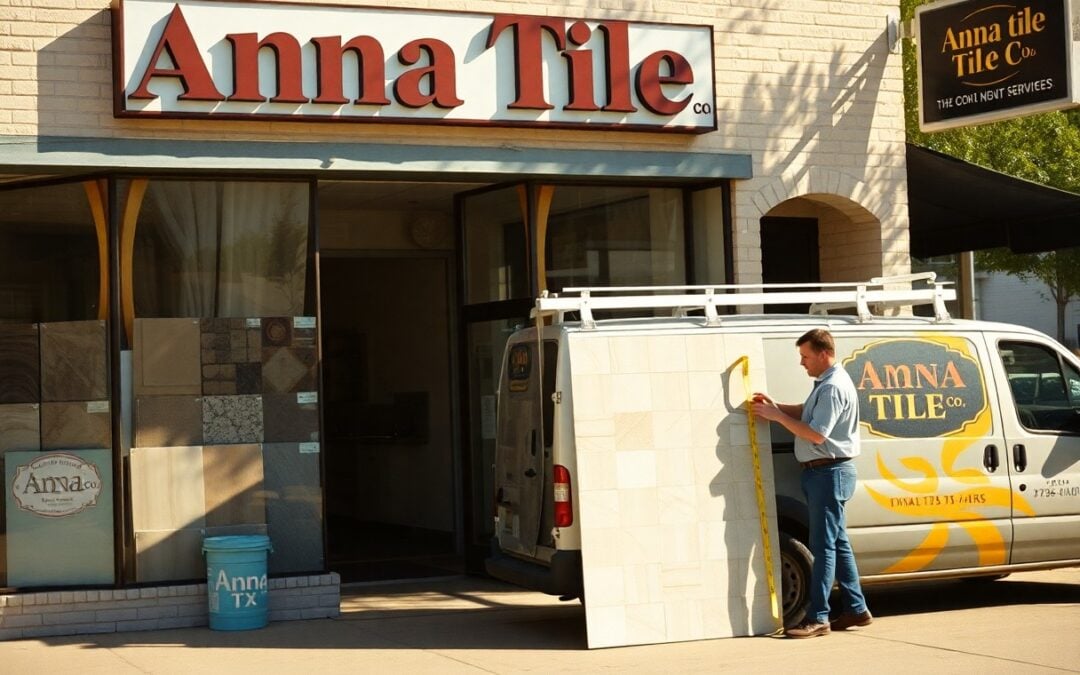
Most searches for a trusted tile company near you in Anna, TX begin with local reviews and licensure checks; you should evaluate portfolios, request references, compare detailed quotes, confirm insurance and warranties, and ask about installation timelines to select a reliable contractor who meets your quality and budget expectations.

Key Takeaways:
- Search Google Maps, Yelp, and Nextdoor for tile companies near Anna, TX and prioritize those with multiple recent 4-5 star reviews.
- Verify business insurance, any trade certifications, and ask for proof of liability and worker coverage before hiring.
- Request a portfolio of recent local jobs and contactable references to confirm workmanship and timeliness.
- Get written, itemized estimates that include materials, labor, timeline, and warranty terms; compare at least three bids.
- Prefer companies with a local showroom or completed projects in Anna/Collin County and a clear warranty on installation.
Understanding Tiles
When you assess tile options for floors, walls or outdoor areas, focus on technical specs: floor tiles commonly measure 10-12 mm thick while wall tiles are 6-8 mm, and popular sizes include 12×24 and 24×48 inches. Manufacturers publish PEI abrasion ratings from 1-5 (PEI 3-5 for floors) and water absorption figures-porcelain ≤0.5% versus higher for standard ceramic-so use those numbers to match performance to your space.
Types of Tiles
You’ll encounter porcelain, ceramic, natural stone, glass and encaustic cement in most catalogs, each differing in porosity, hardness and maintenance needs. After you compare water absorption (porcelain ≤0.5%) and PEI ratings, you’ll typically choose porcelain for heavy-traffic floors and glazed ceramic for walls.
- Porcelain – very low absorption, PEI 4-5, durable for kitchens and entries.
- Ceramic – glazed surface, cost-effective for walls and light-traffic floors.
- Natural stone (marble, granite) – variable porosity, requires sealing, premium aesthetic.
- Glass – non-porous, ideal for backsplashes, can be slippery on floors.
- Encaustic/cement – decorative patterns, thicker (10-14 mm), needs sealing and proper installation.
| Type | Key facts / Typical use |
| Porcelain | Water absorption ≤0.5%, PEI 4-5, suited for high-traffic floors and freeze-thaw climates |
| Ceramic | Glazed, PEI ~1-4, economical for walls and residential floors |
| Natural stone | Porosity varies; sealing required, used for bathrooms, feature floors and counters |
| Glass | Non-porous and stain-resistant, best for backsplashes and accent walls |
Benefits of Choosing Quality Tiles
Choosing higher-quality tile improves longevity and lowers lifetime costs: premium porcelain often lasts 25-50 years with proper installation and maintenance, typically backed by multi-year warranties, and delivers superior stain resistance and easier cleaning, which is especially valuable in kitchens and entryways.
You’ll also recover value through reduced repairs and replacements: materials-only for good porcelain range roughly $3-12 per sq ft while premium stone runs $10-30, and typical installation adds $4-8 per sq ft; combined with proper substrate prep, ANSI-compliant mortars and correct grout, a quality system preserves performance and can cut lifecycle expense by more than half compared with frequent low-end replacements.
What to Look for in a Trusted Tile Company
When vetting companies, prioritize written bids, proof of insurance, and clear timelines so you know cost, scope, and completion date up front. Ask for three references and inspect at least two finished jobs to verify workmanship on grout lines, level transitions, and substrate prep. Expect a written warranty for labor (commonly 1-5 years) and a materials warranty; confirm who handles manufacturer callbacks if tiles arrive damaged or defective.
Reputation and Reviews
Check Google, Yelp, Angi and the BBB for patterns: you want companies with 4.5+ average stars and 20+ recent reviews in your area. Read detailed comments and look at dated photos to confirm consistency across jobs; note how the company responds to complaints. In Anna, TX, prioritize firms with multiple local reviews and verifiable references from homeowners who had similar scope-bathroom remodels or 800+ sq ft floor installs.
Certifications and Experience
Verify certifications like Certified Tile Installer (CTI) from CTEF, manufacturer certifications (Schluter, LATICRETE, MAPEI), and membership in NTCA or state associations. Favor teams with at least 3-5 years of dedicated tile installation and portfolios showing large-format porcelain, heated floors, and shower waterproofing. Ask whether they follow ANSI A108/A118 standards and the TCNA Handbook for installation methods.
Ask to see specific certificates and recent training records-CTI indicates passing a hands-on exam, while Schluter or LATICRETE certifications mean installers are trained on products like Ditra, Kerdi, or uncoupling membranes. Also confirm insurance, worker’s comp, and bonding; request examples of projects with similar tile sizes (e.g., 24×48) and substrates, and ask if they perform in-house testing for flatness, moisture (CM or RH), and proper thin-set selection to avoid future failures.
Local Tile Companies in Anna, TX
Overview of Options
You’ll find three main options nearby: big-box retailers, regional showrooms, and independent installers. Within a 20-30 mile radius there are showrooms in McKinney and Frisco carrying porcelain, ceramic, and natural stone; typical projects run 100-800 sq ft. Materials commonly range $1-15/ft² while installation is often $6-12/ft². You can get in-person samples, design help, and free on-site estimates from many providers.
Overview at a glance
| Type | What to expect |
| Big-box stores | Large inventory, budget tile, DIY options, contractor networks |
| Regional showrooms | Curated selections, design consults, in-house or preferred installers |
| Independent installers | Flexible scheduling, portfolio-based quotes, local references |
Comparing Services and Pricing
When you compare bids, insist on line-item quotes showing materials, labor, demolition, disposal, and any sealing or waterproofing. Contractors often provide 1-3 year workmanship warranties; firms with 10+ years’ experience may charge 10-20% more but can reduce callbacks. You should verify license, insurance, and ask for recent project photos and client contact info to confirm quality.
You should also evaluate lead time and included services: some installers include substrate prep and grout sealing, others bill separately. For example, removal and disposal can add $1-3/ft² while premium stone may raise material costs to $10-15/ft². Ask for a written timeline and payment milestones before committing.
Pricing breakdown (typical)
| Item | Typical cost (Anna area) |
| Materials | $1-15 per ft² (ceramic to natural stone) |
| Labor | $6-12 per ft² depending on complexity |
| Demolition/disposal | $1-3 per ft² or flat rate |
| Sealing/grout | Often $0.50-2 per ft² if not included |
| Example 400 ft² project | Approx. $2,800-$9,000 depending on tile and services |
Questions to Ask a Tile Company
When interviewing contractors, ask for written bids, proof of insurance, and at least three local references from jobs similar to yours. Request a detailed timeline (typical kitchen floor 2-4 days, full shower 3-5 days), a materials list with brands, and photos of finished work. Also verify licensing, lien releases, and whether permits are included so you avoid surprises and hidden costs.
Project Specifics
Tell the company your tile type and dimensions-12×24 porcelain behaves differently than 2×2 mosaic-and specify substrate, expected traffic, and layout pattern (herringbone, straight). Ask about substrate prep (cement backer board vs. direct bonding), required slope for showers (1/4″ per foot), grout joint width, and whether you want underfloor heating; these factors change labor, adhesive selection, and final cost.
Warranty and Support
Ask for written warranties covering both materials and workmanship: manufacturers often offer 10+ year or limited lifetime warranties on tile defects, while installers typically provide 1-5 year workmanship guarantees. Clarify what is covered (cracking, delamination, grout failure), who handles claims, and whether warranty work is free or pro-rated so you’re not surprised later.
Get specifics in writing: request response times (inspection within 7 days), repair timelines, and whether the installer covers removal, replacement, and labor. For example, some Anna-area installers provide a two-year grout-sealing warranty and will remediate hairline grout cracks within 30 days at no charge; others require proof of proper maintenance to validate claims. Ensure warranties are transferable if you sell your home.

DIY vs. Professional Installation
Pros and Cons
You can save money and control timing by doing small projects yourself, but mistakes on layout, waterproofing, or substrate prep often lead to costly rework; professionals bring speed, consistent grout/joint control, and many offer 1-5 year workmanship warranties for complex jobs like showers or large-format tile.
Pros vs Cons
| Pros | Cons |
|---|---|
| You save on labor costs (often 20-40% of project) | You risk uneven grout, lippage, or wasted tile |
| You control schedule for small rooms | Projects take longer without experience (bathroom 1-3 days for pros) |
| Opportunity to learn a new skill | Special tools and materials add hidden costs |
| Can reuse leftover tile and materials freely | No contractor insurance or liability coverage |
| Immediate fixes for small chips or backsplash | Manufacturer warranties may require certified installers |
| Lower upfront expense for simple installs | Complex patterns, mosaics, or large formats need pro skill |
| Full control over finish choices | Poor substrate prep can cause tiles to pop later |
When to Hire a Professional
You should hire a pro for large areas, exterior installations, or wet areas where waterproofing matters; contractors handle substrate leveling, thinset selection, and expansion joints so your floor lasts and tiles meet manufacturer specifications.
Choose a professional when projects involve radiant heat, natural stone, large-format tile (over 24″ panels), complex layouts or multiple transitions-these typically require precision, specialized tools and experience; for example, a 300 sq ft kitchen or a tiled shower with curb and niche is best done by a licensed installer to avoid callbacks and ensure warranties.
Maintaining Your Tile
After selecting tile, you’ll extend its life by matching care to material: porcelain glazed tiles resist stains and need only weekly sweeping and occasional mopping, while natural stone (marble, travertine) requires sealing every 12-24 months and pH-neutral cleaners. You should plan grout resealing every 6-12 months in wet areas, and expect professional polishing for stone every 3-7 years in high-traffic homes to keep joints tight and surfaces even.
Cleaning and Care Tips
You can prevent damage with routine habits: sweep or vacuum daily in entryways, mop weekly with a pH-neutral cleaner, and blot spills immediately to avoid staining. For tile-specific care, follow manufacturer instructions-acidic cleaners damage limestone and some grout.
- Sweep or vacuum to remove grit that abrades surfaces.
- Mop with a diluted, pH-neutral cleaner; avoid bleach on colored grout.
- Seal grout and natural stone per product recommendations (6-24 months).
The simple routine-sweep daily, mop weekly, spot-clean spills, and reseal grout on schedule-prevents most common issues and keeps your floors looking new.
Long-Term Maintenance Strategies
You should budget for periodic interventions: regrouting or grout replacement typically occurs every 5-10 years depending on traffic, and high-use commercial-style installations benefit from epoxy grout that resists staining. Schedule professional inspections every 3-5 years to check for lippage, cracked tiles, or failing substrate that can compromise whole-floor stability.
For durable results, keep detailed records of sealing and repairs, rotate heavy furniture to avoid point loads, and use entry mats to reduce tracked-in grit; homeowners in Anna reported extending tile lifespans by 30-40% after adopting timed resealing and annual professional checks, which often defer costly replacements.
To wrap up
So you can find a trusted tile company near you in Anna, TX by checking online reviews, verifying licenses and insurance, requesting written estimates and warranties, viewing past work, and asking for local references; compare at least three providers and trust your judgment on communication, timeline, and professionalism to select the best fit.
FAQ
Q: How can I find a trusted tile company near me in Anna, TX?
A: Use a mix of online and local resources: search Google Maps and Yelp for Anna, TX tile contractors; check ratings and recent photo portfolios; read reviews on BBB, Angi, Houzz and Nextdoor; ask neighbors, realtors or local hardware/home improvement stores for referrals; verify that the company lists Anna or Collin County on its service area. Shortlist two or three companies and request in-person estimates to compare professionalism, communication and workmanship examples.
Q: What credentials and protections should I verify before hiring a tile installer in Anna?
A: Confirm the business is properly registered and insured: ask for general liability and workers’ compensation certificates and any local business registration required by the City of Anna or Collin County. Request proof of experience with similar projects, recent references with contactable clients, and a portfolio. Ensure the estimate specifies who performs work (company crews vs. subs), who pulls permits, and what warranties are provided for labor and materials.
Q: What does tile installation typically cost in Anna, TX and how should I compare estimates?
A: Costs vary by tile type, site conditions and scope. Installed prices for common ceramic/porcelain often range roughly $6-20 per sq ft; natural stone or intricate patterns can be $20-45+ per sq ft. Estimates should be itemized: tile cost, labor, substrate prep (removal, leveling, backer board), grout/sealant, disposal, permits and cleanup. Compare line items, project timeline, payment schedule, change-order policies and whether the quote is fixed or time-and-materials.
Q: What key questions should I ask during an on-site estimate visit?
A: Ask whether the contractor is licensed/insured and who will do the work; how they handle substrate prep, moisture/movement issues and transitions; if permits are required and who obtains them; what tile and setting materials they recommend and why; expected timeline and daily work hours; cleanup and dust control; warranty details and how punch-list items are handled; request written itemized proposal, payment terms and at least two local references.
Q: How do I verify workmanship and get support after installation is complete?
A: Inspect finished work for even grout lines, consistent tile alignment, level transitions and proper sealing. Test areas (doors, shower operation) and note any grout haze or uneven edges. Keep the written contract, warranty and invoices; get a lien waiver on final payment. If issues appear, document them with photos and contact the contractor immediately to request corrective action under warranty. For permit-related inspections, confirm final approval with the City of Anna or Collin County building office if applicable.
About Is there a trusted tile company near me in Anna TX? with Flooring Source of Texas
Homeowners searching for Is there a trusted tile company near me in Anna TX? choose Flooring Source of Texas for quality materials, careful installation, and clear communication. Our Flower Mound team serves nearby DFW communities with hardwood, vinyl, tile, laminate, carpet, and remodeling support.
Request a free estimate for Is there a trusted tile company near me in Anna TX?, browse our service areas, or contact us at (972) 778-6855. We help you compare flooring options, plan timelines, and finish the job cleanly.
Is there a trusted tile company near me in Anna TX? — local guidance from Flooring Source of Texas
Flooring Source of Texas helps homeowners in Anna, TX plan tile projects with clear product options, realistic timelines, and install crews that protect your home day by day. Our Flower Mound showroom at 1900 Long Prairie Rd Ste 116 is open for sample browsing, and we provide free on-site estimates across North Texas.
When we evaluate a home, we look at subfloor condition, moisture risk, transitions between rooms, stair strategies, and how the finished floor will live with pets, kids, and Texas heat. That practical checklist keeps tile projects from turning into change orders after demolition starts.
Popular materials for Anna, TX homes include waterproof luxury vinyl plank for kitchens and mudrooms, engineered hardwood for living areas that want natural grain, porcelain or ceramic tile for wet zones, and carpet where comfort matters most. We help you compare wear layers, core types, and maintenance so the quote matches how you actually use each room.
Call (972) 778-6855 or visit our contact page to schedule a free estimate. Explore related services on our Texas flooring and Texas remodeling pages, or review coverage on our service areas page.
Flooring Source of Texas has served DFW families for decades with straightforward pricing, careful prep, and clean job sites. Whether you are refreshing one room or remodeling multiple spaces in Anna, TX, we keep communication simple from sample selection through final walkthrough.
Flooring Source of Texas provides flooring installation and remodeling support across this community and the greater DFW area. From the first sample appointment in Flower Mound to the final walkthrough, we keep scope, product, and schedule aligned so homeowners know what happens each day on site.
Our crews install waterproof luxury vinyl, hardwood and engineered hardwood, ceramic and porcelain tile, carpet, and laminate. We also coordinate kitchen and bathroom remodeling work when flooring is part of a larger renovation. Moisture testing, flatness checks, and transition planning are part of the standard process—not optional extras.
Request a free estimate at (972) 778-6855 or through our contact page. Showroom: 1900 Long Prairie Rd Ste 116, Flower Mound, TX 75022. Browse flooring services, remodeling, and service areas to see how we help nearby cities with the same standards.